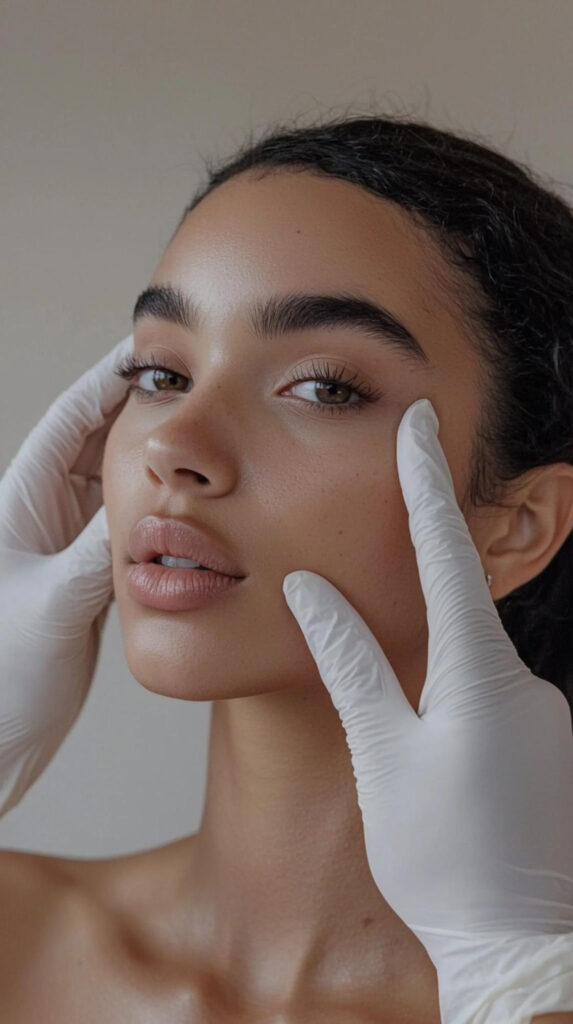
Refining what was lost – restoring function, form, and confidence.
Revision rhinoplasty is a secondary or corrective nasal surgery performed after a previous rhinoplasty that resulted in breathing difficulties, asymmetry, or aesthetic dissatisfaction.
It is among the most complex facial surgeries due to scar tissue, altered anatomy, and weakened cartilage structures.
Common reasons for revision include:
Persistent nasal obstruction
Asymmetry or tip deformity
Collapse of nasal bridge
Over- or under-resection of cartilage
Visible irregularities on the dorsum
The procedure often requires cartilage grafts from the septum, ear, or rib to rebuild the nasal framework. The open approach is generally preferred for better visibility and precision.
Advantages:
Restores both breathing and appearance
Corrects deformities from previous surgery
Strengthens nasal support structure
Provides long-term stability and natural results
Personalized Treatment Plans
Every procedure is tailored to your unique goals and skin type, ensuring the best and most natural-looking results.
Expert Medical Team
Certified specialists use advanced medical aesthetics techniques to deliver safe, effective, comfortable experiences.
Cutting-Edge Technology
We utilize the latest FDA-approved devices and products to achieve visible improvements with minimal downtime.
Long-Lasting Confidence
Our treatments don’t just enhance your appearance they boost your confidence and help you feel your best every day.
Procedure Stages
Comprehensive Evaluation: Detailed 3D imaging and airway analysis.
Anesthesia: General anesthesia is used.
Incision: Usually through an open approach.
Scar Tissue Removal: Old scar tissue and adhesions released.
Reconstruction: Cartilage grafts harvested and shaped.
Aesthetic Refinement: Dorsum, tip, and nostrils rebalanced.
Splint & Recovery: External support for 7–10 days.
Before and after the operation
Before Operation
Wait at least 12 months after the first surgery before undergoing revision.
Avoid smoking and alcohol for 2 weeks prior.
Discontinue blood thinners 7–10 days before.
Discuss prior surgical records and complications with your surgeon.
After Operation
Keep the head elevated for several days.
Expect more swelling than a primary rhinoplasty (normal due to scar tissue).
Avoid physical impact and wearing glasses for 4–6 weeks.
External splint removed after 7–10 days; most swelling subsides within 4 weeks.
Final results become apparent after 9–12 months.
Procedure Risk
Prolonged swelling
Scar tissue recurrence
Infection (rare)
Persistent asymmetry (rare in expert hands)
Need for further revision (5–10% of cases)
Despite its complexity, with proper technique, revision rhinoplasty yields excellent long-term results.
Frequently Asked Questions
When can revision rhinoplasty be done?
At least 12 months after the previous surgery.
Is it more difficult than primary rhinoplasty?
Yes, due to scar tissue and altered anatomy, it requires advanced expertise.
Will breathing improve?
Yes, functional correction is a key focus.
When are final results visible?
Typically after 9–12 months.
“When we talk about aesthetic surgery, I would describe it as life-changing. The reason for this is that getting rid of the problems with your physical appearance will not only beautify your appearance but also increase your self-confidence.”